
































Disclaimer: This article touches on some adult subject matter. If you’re under the age of 18, you should move away from this content.
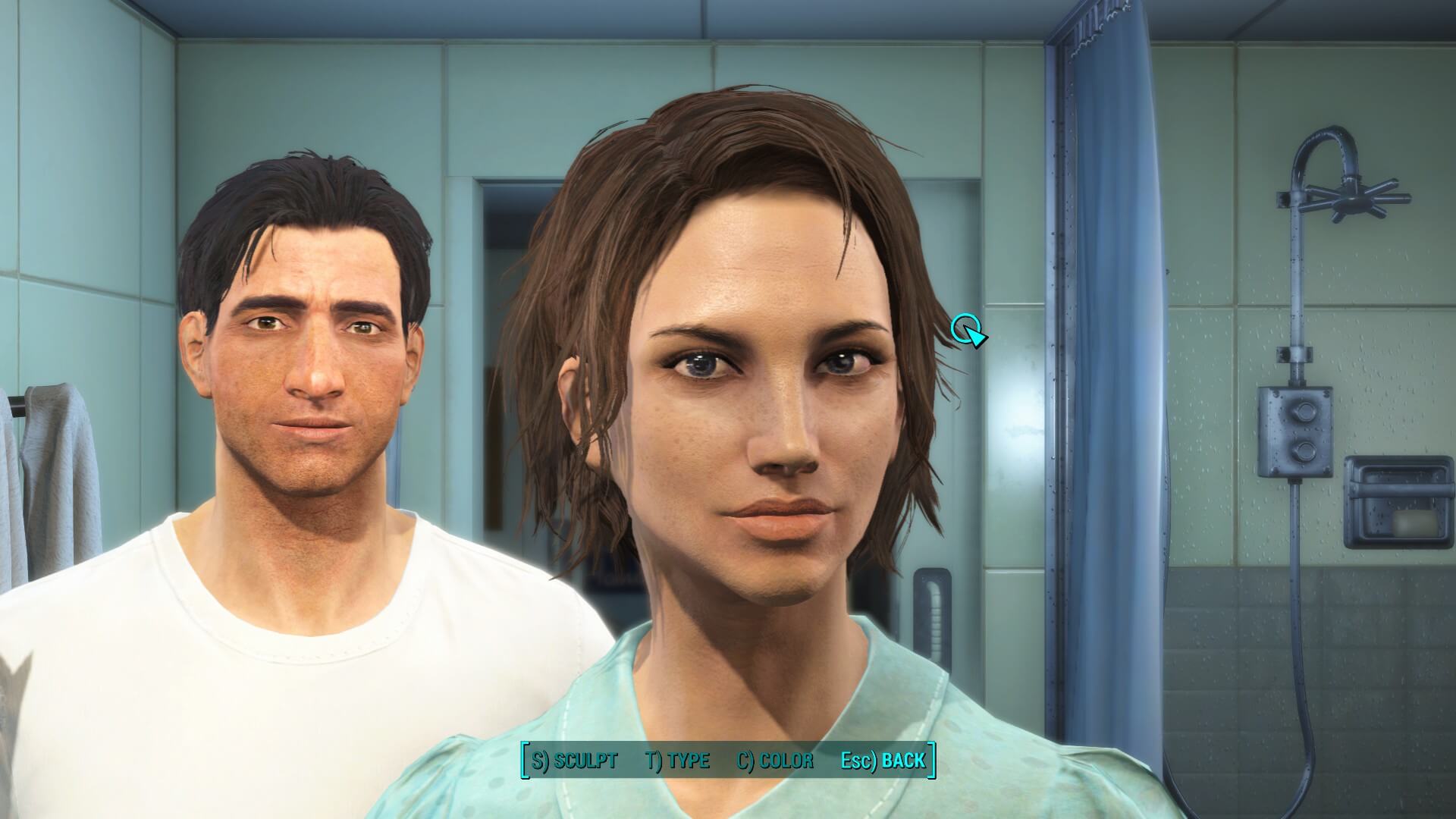
I spent 47 minutes trying to make a 58-year-old woman into a character creator. The game gave me 26 eyebrow options, three kinds of freckles, and enough tattoos to cover a small army. I could adjust the width of her nostrils with surgical precision.
Age, however, was apparently complicated.
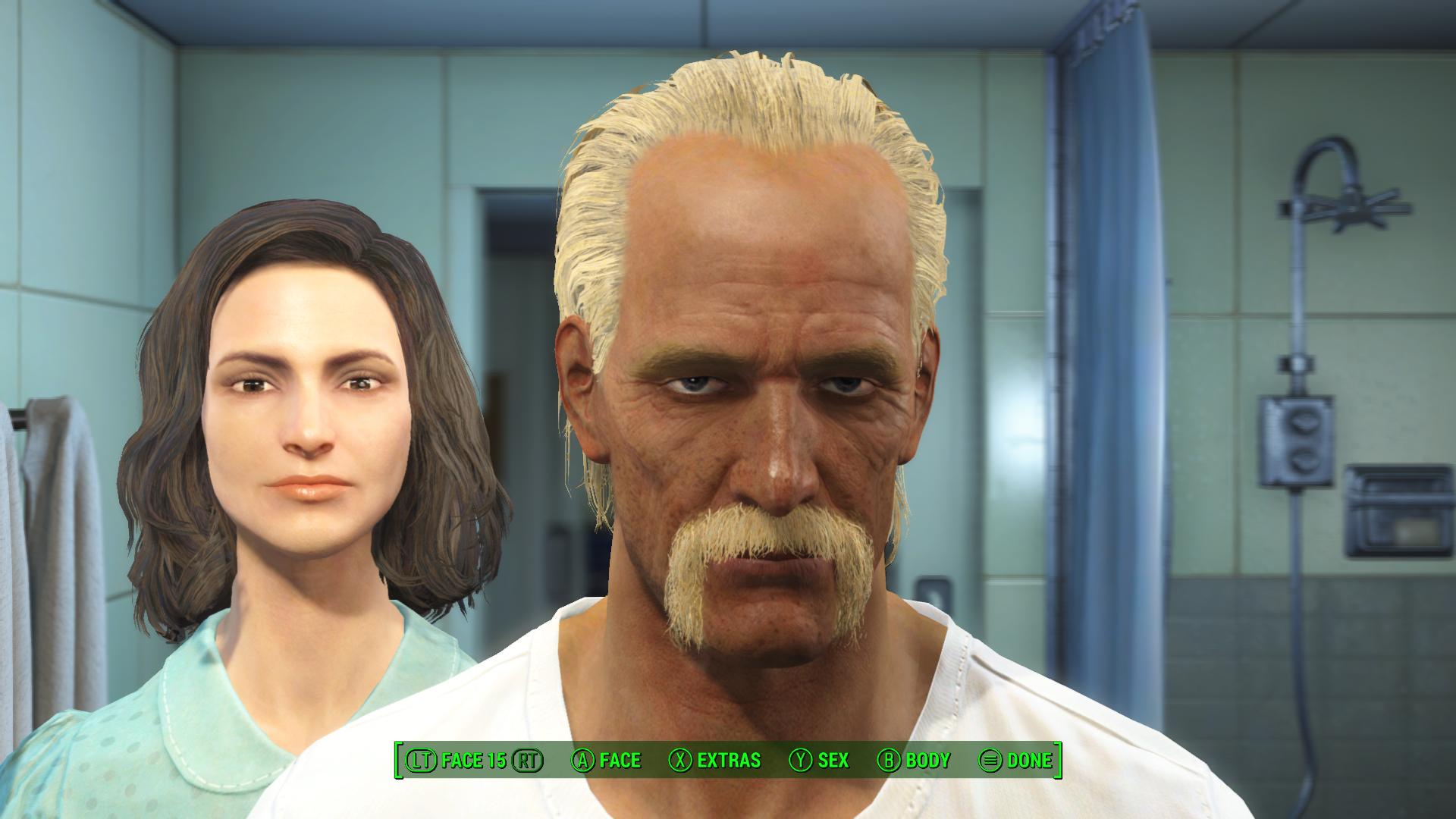
There was one slider. Pull it to the right, and a set of faint lines appeared around her eyes. Keep going, and the game added gray to her hair. Underneath, she still had the smooth face and body of a 25-year-old hero who had accidentally selected the senior discount at checkout.
This was a problem because I was trying to recreate Mara Venn, a veteran from an old tabletop campaign. Mara is 58, has a bad left knee, and has spent most of her adult life negotiating with people who carry swords. She is not a grandmotherly quest dispenser. She is not a witch living at the edge of town. She is the person who walks into the dungeon.
The character creator had no idea what to do with her.
You Can Be an Elf, Just Not a Middle-Aged Woman
Games are extremely good at letting us become impossible things. We can build blue elves, seven-foot reptiles, and glowing space monks with mechanical jaws. A player may choose horns, scales, scars, cybernetic eyes, and a voice that sounds as if it comes from the bottom of a volcano.
Ask for a believable woman over 45, and the options suddenly become shy.
Male characters can age in visible, story-friendly ways. Gray hair suggests command. A lined face belongs to a general, a king, a retired assassin, or a man who has survived three wars and plans to complain about all of them. His age is evidence.
Women are more often pushed toward two ends of the same narrow hallway. They can be young and conventionally attractive, or visibly old enough to play a mother, mystic, or background NPC. The long stretch between those categories receives much less attention.
This is not an argument against beautiful young heroes. Games are fantasies, and there is nothing wrong with wanting an idealized avatar. The problem is the shortage of alternatives. When a game advertises a deep character creator, I expect more than the ability to make the same young face in 40 shades of eye shadow.
Mara was not supposed to look immortal. Her age was part of the pitch.
She had broken her nose years earlier. The skin around her eyes should have shown time spent outdoors. Her shoulders were strong, but her stance had changed after an injury. None of this made her less heroic. It made her look as though the campaign had begun before the player pressed “New Game.”
The Wrinkle Overlay Is Not Fooling Anyone
Aging changes more than skin texture.
Faces lose and gain volume in different places. Posture shifts. Hairlines change. Bodies carry the evidence of work, illness, exercise, childbirth, injuries, and ordinary time. Two people of the same age can look wildly different because age is not a costume.
Many games handle it like one.
The standard solution is a wrinkle texture placed over an otherwise youthful model. It is the digital equivalent of casting a 30-year-old actor as an older person and hoping a little gray powder will settle the matter.
Players notice. The result may pass during gameplay, especially if most scenes are viewed from behind a helmet, but it tends to fall apart in close-up dialogue. The character looks less like an older adult and more like a young hero suffering from an unusually high-resolution skin condition.
Body options are often even more limited. A creator may offer “slim,” “muscular,” and “large,” each built on the same youthful proportions. Age changes never reach the hands, neck, arms, or movement. Apparently, only faces receive the passage of time.
Animation makes the problem harder. A genuinely older character should not automatically move as though fragile, but neither should every body share the exact same idle stance and sprint cycle. Mara can still swing an axe. She just should not stand like she is waiting for a fitness influencer to take her photo.
Modders Usually Arrive Before the Developers
If an RPG has an active PC community, somebody will eventually try to repair its character creator.
Modders add new face textures, body shapes, hairstyles, and complexions. They remove unnecessary gender restrictions and create options the original developers apparently never imagined players would request. Sometimes these additions are rough. Sometimes they fit the game so well that returning to the standard creator feels like losing an expansion pack.
The popularity of such mods should tell studios something. Not all players want to build the same kind of fantasy.
Some want to play by themselves. Others want a character who resembles a parent, an actor from an older film, or the hero of a story they have carried around for years. Plenty of players simply find mature characters attractive and would like games to acknowledge that without turning it into a joke.
Age diversity also produces better stories. A 19-year-old chosen one and a 58-year-old chosen one don’t approach power, danger, or responsibility the same way. The younger hero may discover who they are. The older hero may already know, and be forced to decide which part of that identity can survive the mission.
That is useful narrative material, not a technical inconvenience.
AI Could Finally Break the Slider
Generative AI suggests a different kind of character creation. Instead of moving a set of sliders built around one standard body, the player could describe the person they want.
“Fifty-eight-year-old mercenary, strong shoulders, weathered face, broken nose, cropped gray hair, old injury affecting her left leg.”
That description contains more stories than “Age: 80 percent.”
A future game could turn those words into several visual concepts, let the player choose one, and then convert the result into a model that works within the game. The system might generate portraits, expressions, clothing ideas, and variations from different points in the character’s life.
Adult platforms are already exploring the demand for more specific fictional characters. An AI MILF Porn Generator from Joi allows adult users to create images centered on mature fictional women and their own visual preferences. Used responsibly, it shows how generative technology can make room for ages and body types that mainstream digital media often treats as secondary. The line is clear: every character must be an adult, and the likeness of a real person should never be used without permission.
The adult market may seem separate from game development, but both are responding to the same frustration. People want more control over the characters they see. They do not want a preset catalog deciding which ages, bodies, and appearances are worthy of attention.
AI can widen those choices. It can also create fresh problems.
A generated face has to remain consistent under different lighting and expressions. Clothing cannot change between scenes. The character must work from every camera angle, survive animation, and avoid looking like a different person each time a cutscene begins.
That is before we reach consent, training data, and the risk of players recreating identifiable people. Any game offering text-to-character tools would need firm rules about uploaded photographs and non-consensual sexual content. “The AI made it” is not a magic sentence that removes responsibility.
Please Let Her Look Her Age
After 47 minutes, I accepted the closest version of Mara the game could produce. She had gray hair, a few lines around her eyes, and the posture of someone about to star in an energy-drink commercial.
Then the opening cutscene began.
A village leader called her “young adventurer.” Another character explained the recent war as if Mara had spent the previous 30 years sealed inside a barrel. The dialogue had made the same assumption as the character creator: the hero arrives without a past because heroes are young by default.
I laughed, but it exposed the larger issue. Visual customization can only do so much if the world refuses to recognize the character we created.
The next generation of RPGs should treat age as more than a surface option. It could influence how strangers speak to the player, which memories appear in dialogue, and whether certain characters see the hero as inexperienced, threatening, or familiar. Age does not need to become a stat penalty. It can be part of role-playing.
Give older characters history without automatically making them tired. Give mature women beauty without digitally sanding away every sign that they have lived. Let them be romantic leads, villains, fools, soldiers, and heroes. Most importantly, let them be specific.
Mara Venn does not need to look like a young model with silver hair. She needs the face of someone who has won arguments in dangerous rooms, made mistakes that still bother her, and learned exactly when not to draw the axe.
That is what I wanted from the character creator: not more wrinkles, but evidence of a life before the loading screen.
What are your thoughts on how modern games handle age and experience in character creation? Let us know in the comments below! Whether you are meticulously tweaking a character build in World of Warcraft or starting a fresh single-player RPG adventure (like in Fallout 4 or Skyrim), do you find yourself frustrated by the lack of mature, lived-in options? Have you ever resorted to downloading mods just to give your hero a believable history, or do you prefer the idealized, youthful aesthetic that comes standard? Share your character-creation struggles, and let’s talk about it!


