



































Coffee Talk Tokyo is the third and latest entry in the trilogy of the cozy coffee-making narrative game series. The installment introduces brand-new features, interesting subjects, and a new, highly beloved setting. The game does an excellent job of engaging players with these elements, but struggles a bit with some of its executions.
A Japanese Twist
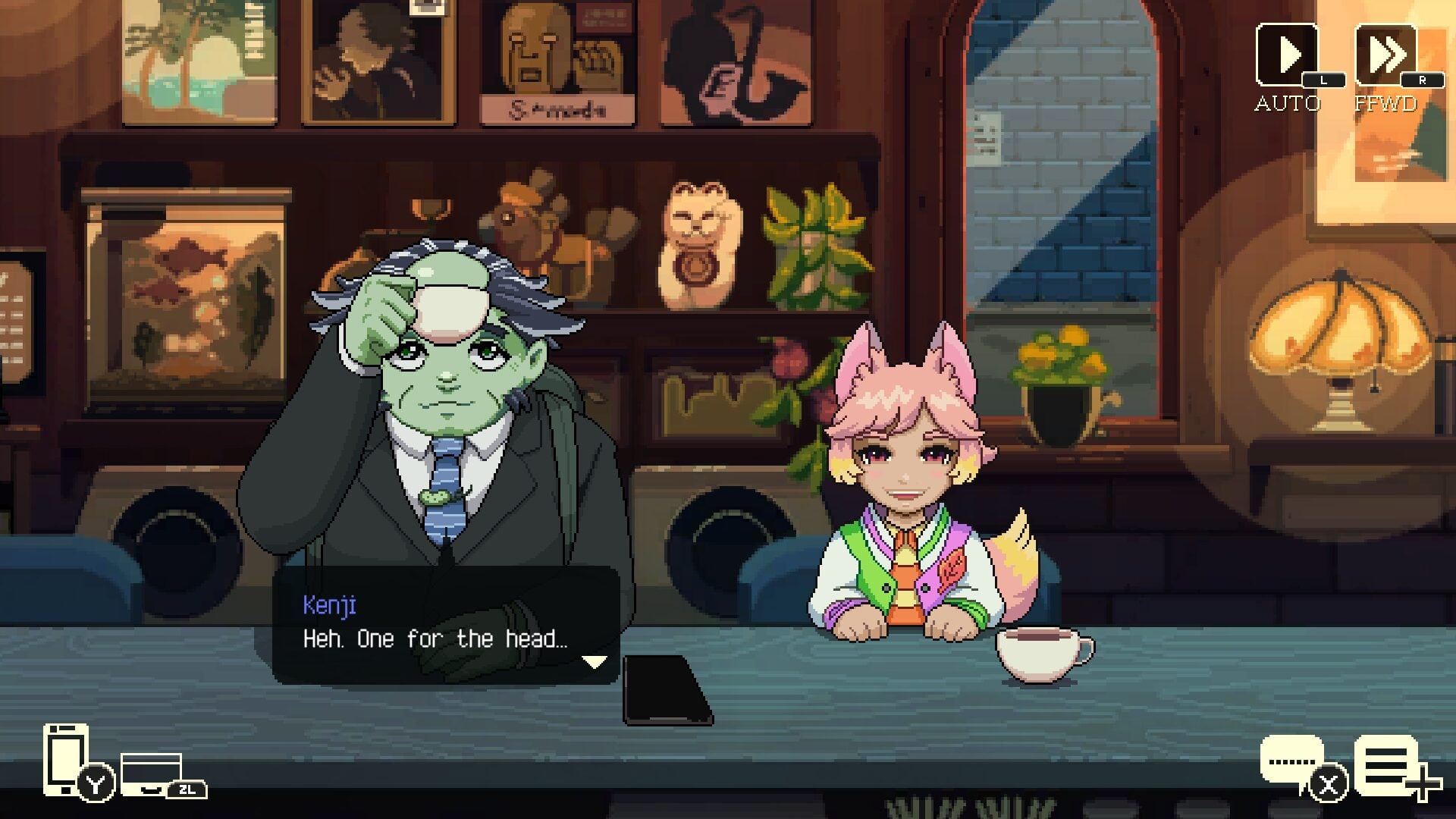
Coffee Talk Tokyo, like previous games, puts players in the shoes of a mysterious barista in a fantastical world. This time, players control a seemingly different barista who owns a café in Tokyo. The new setting introduces new narrative influences. To maintain its themes, Coffee Talk Tokyo’s animal anthropomorphisms offer a more Japanese twist. Players will encounter several yokai and Japanese folklore creatures, from the standard Kappa and Nekomimi to even a Yukionna.
Players encounter and speak to several new characters, all of whom they’ll learn more about, get closer to, and help deal with several life struggles. Through these characters, Coffee Talk Tokyo tackles several popular and niche societal and pop culture topics we face in the modern age.
These topics include uncommon partner dynamics, ideologies, social faux pas, and even several topics that are barely discussed. These all take center stage in Coffee Talk Tokyo right from the start of the game. While the latest installment also tackles many of the topics seen in previous titles through a bunch of lovable and zany characters, what makes it stand out is its setting, cultural variances, and the intensity of some of the topics.
Regardless, these subjects excellently highlight our ever-changing world, as they are told through endearing characters whose stories are incredibly empathetic in various ways. At least one character will be relatable to every player in some way. Conversations with them are insightful and fun to listen to, and the characters are all endearing in many ways.
New Inclusions And Challenges
Narrative aside, players can take on their role as a barista however they wish. While they usually do not need to get every drink order perfectly or even correctly to progress the story, the endings they’ll end up with hinge on their beverage making performance.


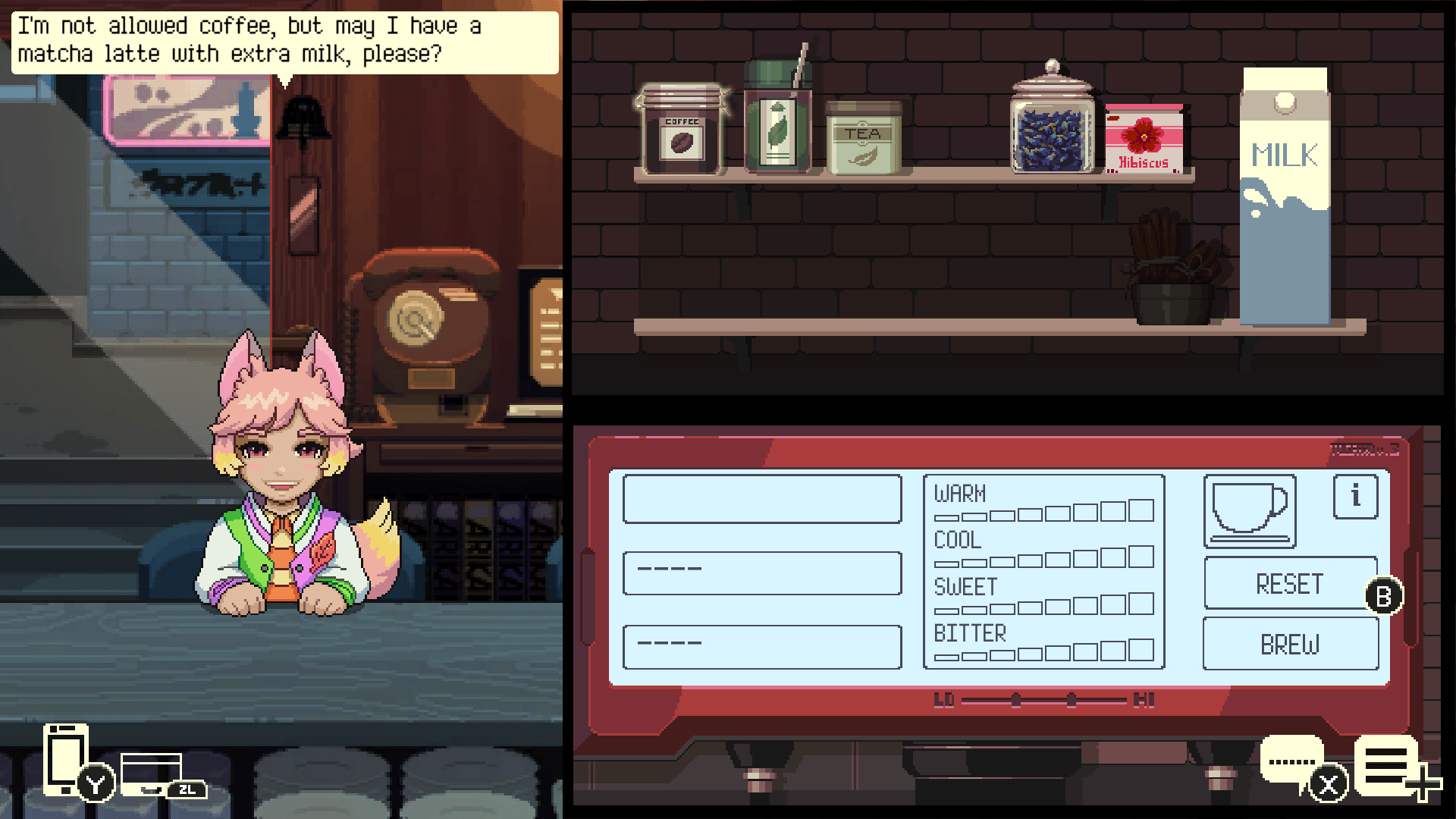
Coffee Talk Tokyo introduces several new features to the game, and for the most part, they’re engaging additions that make crafting drinks feel fresh. These additions include the new Hot and Cold options. These two buttons determine what drinks you can make and, by extension, what ingredients can be selected or not. Hot drinks are more direct and are basically the norm of the series. Cold drinks, however, have a smaller list of usable ingredients that are more unique.
However, things get even more interesting when Ice Cream and Milkshakes are involved. Some cold drinks use both, while others use neither or just one of them. This unsurprisingly makes crafting and deciding what drink to make, especially with open-ended requests, more interesting but also more challenging at times. The game also adds Stencils, a new way to decorate drinks that is simpler than the previously established latte art option. These inclusions make being a barista more fun than the other games, as it makes it more creative, but the added challenge can be frustrating at times.
Players can either serve a bad, good, or great drink in response to their request, but making the best drink possible can sometimes be a trial-and-error process. This is because you need to pay attention not just to the drink request but to the entire conversation leading up to it. The café’s customers in Coffee Talk will not always make their drink requests as literal as in previous games.

Visuals And Music
However, sometimes their requests are too vague, leading to tedious moments trying to discern which drink to make, especially when two drinks can have the exact same ingredients, but the order of selection can drastically change the drink you make, which can be annoying.
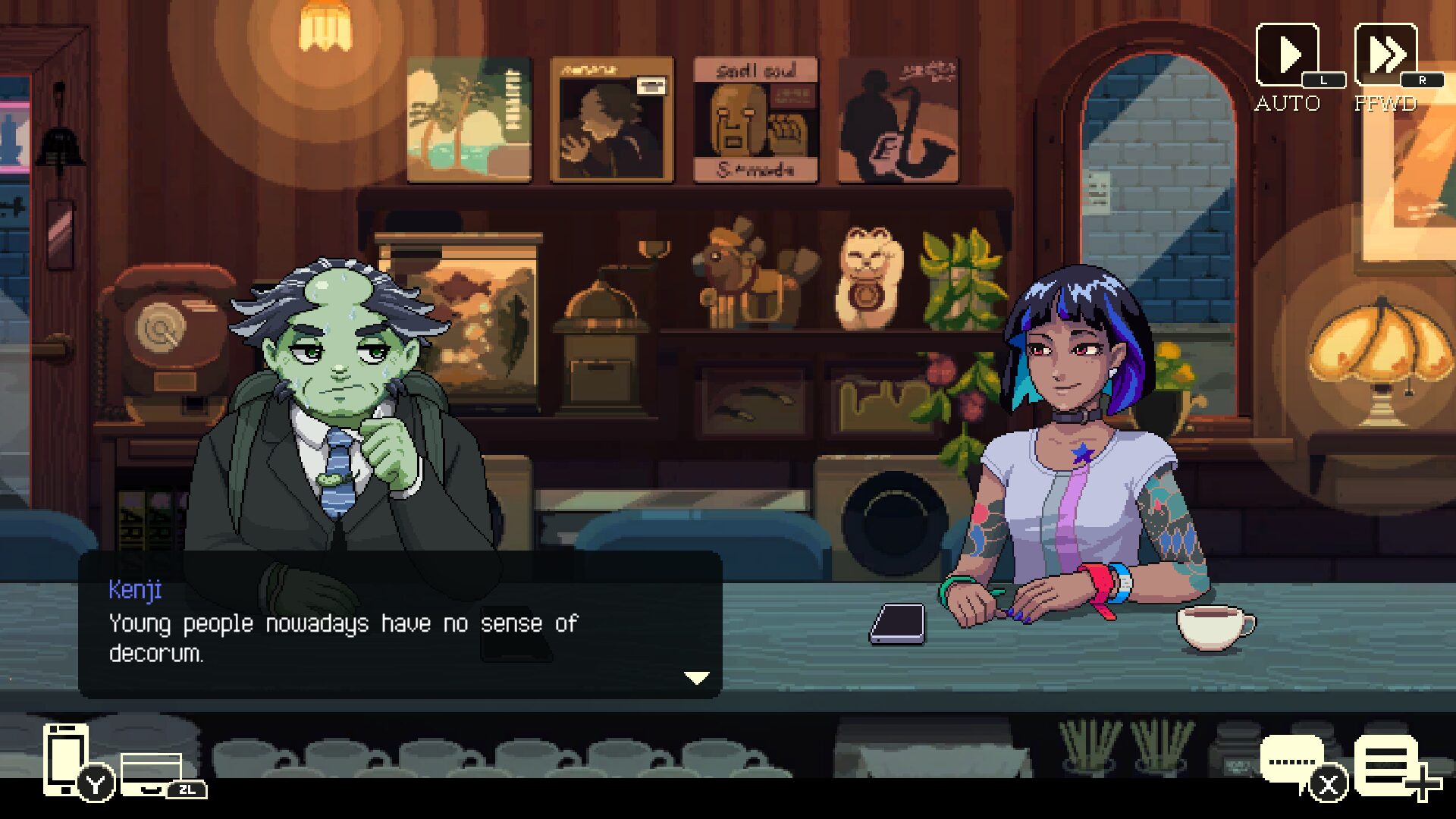
Visually, Coffee Talk Tokyo’s pixel animations and aesthetic are mostly the same as in previous entries. However, the new character designs for several Yokai and half-Yokai customers are intricate and great, as well as the game’s picturesque drink designs.
In terms of music, Coffee Talk Tokyo uses a lo-fi hip hop track list as its original soundtrack. Like in previous games, the new songs do an excellent job of maintaining and enhancing the atmosphere and vibes of a quiet café. However, while an integral part of the game, the soundtrack doesn’t have many tracks that stand out.
Final Thoughts
Overall, while not perfect, Coffee Talk Tokyo is an impeccable game with an engaging narrative and great, immersive elements.
The Review
Coffee Talk Tokyo
While not perfect, Coffee Talk Tokyo is an impeccable game with an engaging narrative and great, immersive elements.
PROS
- Great narrative
- Great visuals
- Cool new features
CONS
- Some drink orders are too vague
- Music is lackluster at times


